Ire’ into the New Year: Castle Ardtarmon
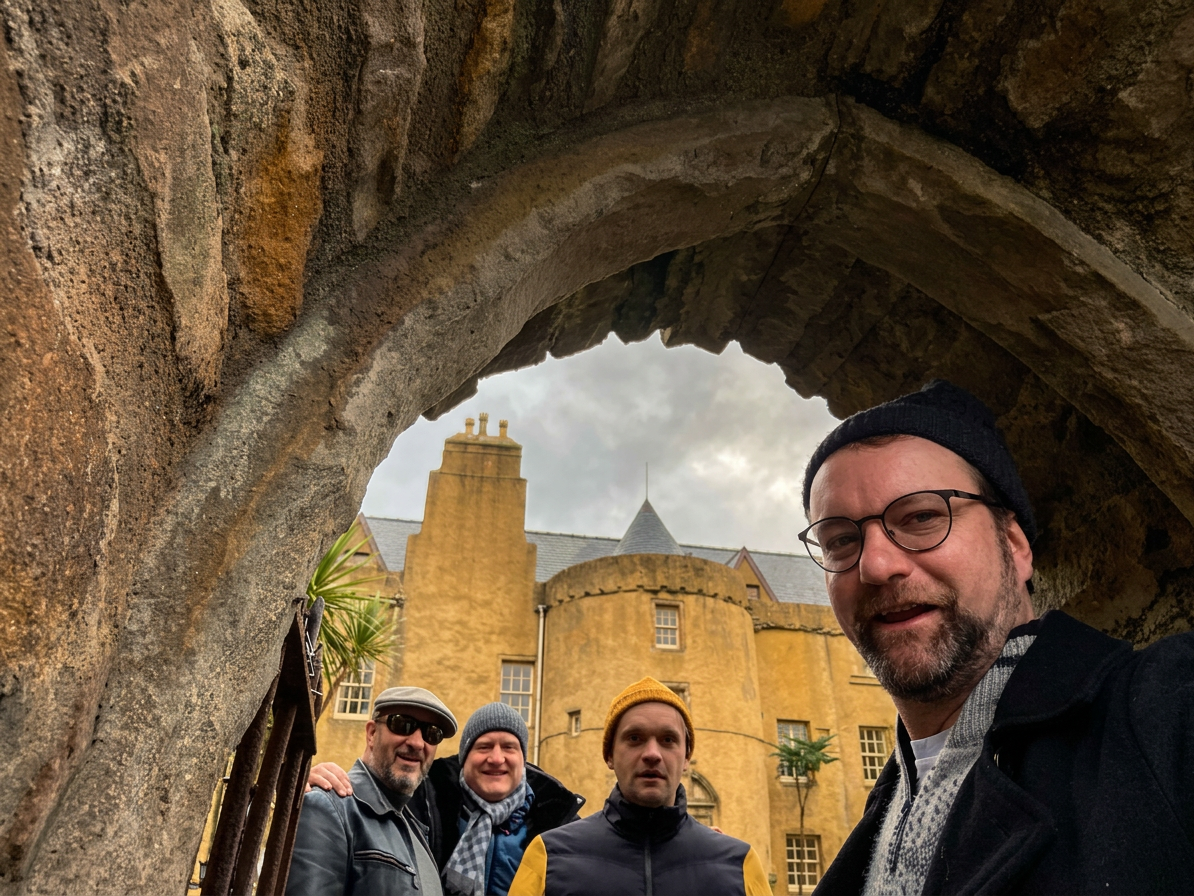
When „The Smut“ – Manfred Marc Umfahrer – assembles a crew like the pirate captains of old and gets in touch with you, there’s no point in hesitating – you sign on. Experience guaranteed: 100%. And that’s exactly how it happened. The four of us boarded a plane from Vienna to Ireland on December 30th, 2026, with the mission to ring in the New Year in a coastal castle.
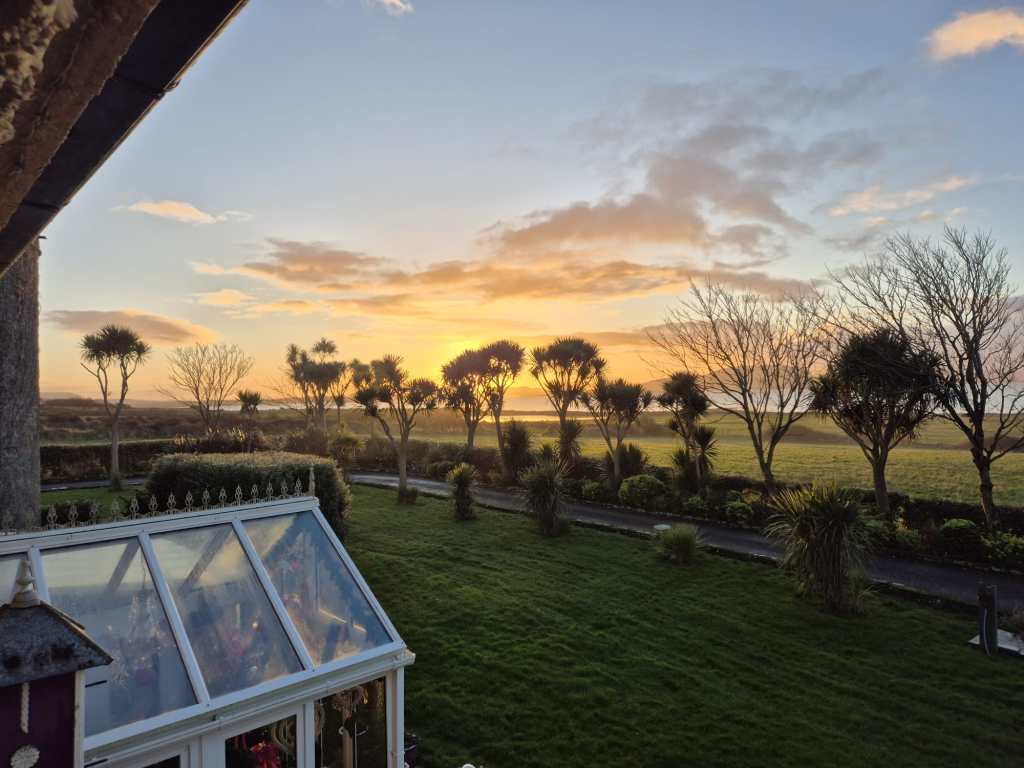
Soon after landing, sitting in a car driven on the “wrong” side, it became clear that we had arrived in a country capable of calming any party frenzy simply through its landscape. Transfigured, highly saturated panoramas, everything slightly dreamy and rich in rainbows. And all this in winter, while the continent lay under fog and cold. A climate to envy.
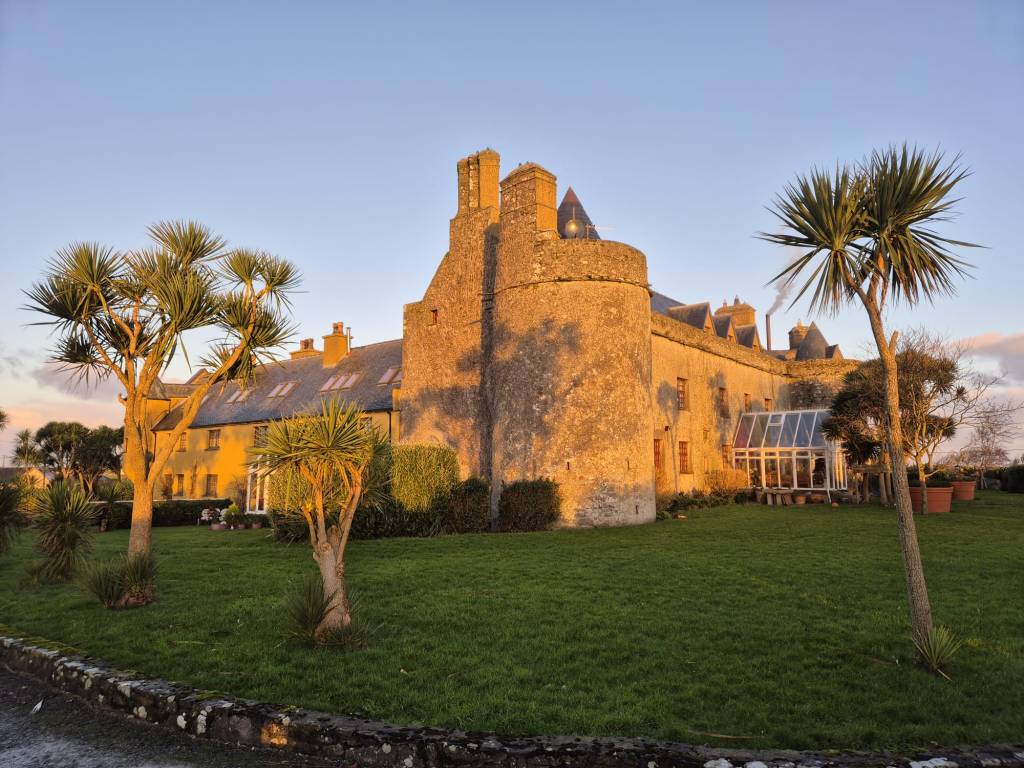
At the castle itself – Castle Ardtarmon – we were welcomed by the resident family crew in a 1970s‑style “throne room,” with the warmest hospitality and culinary abundance. As expected, the first night ended in disaster: a mad Irish rally from pub to pub. And as a seasoned sailor, our team leader Schmuty Schmut naturally couldn’t resist challenging every Irish bear he could find at the bar to an arm‑wrestling battle. He held his own.
What else happened there an those night shall not be the subject of this blog post. As befits a music blog, the focus will be on the sounds of Ireland – the geographical ones and the instrumental ones, described theoretically and through analogy.
Raghley Blowhole – A Coast Blows Its Horn
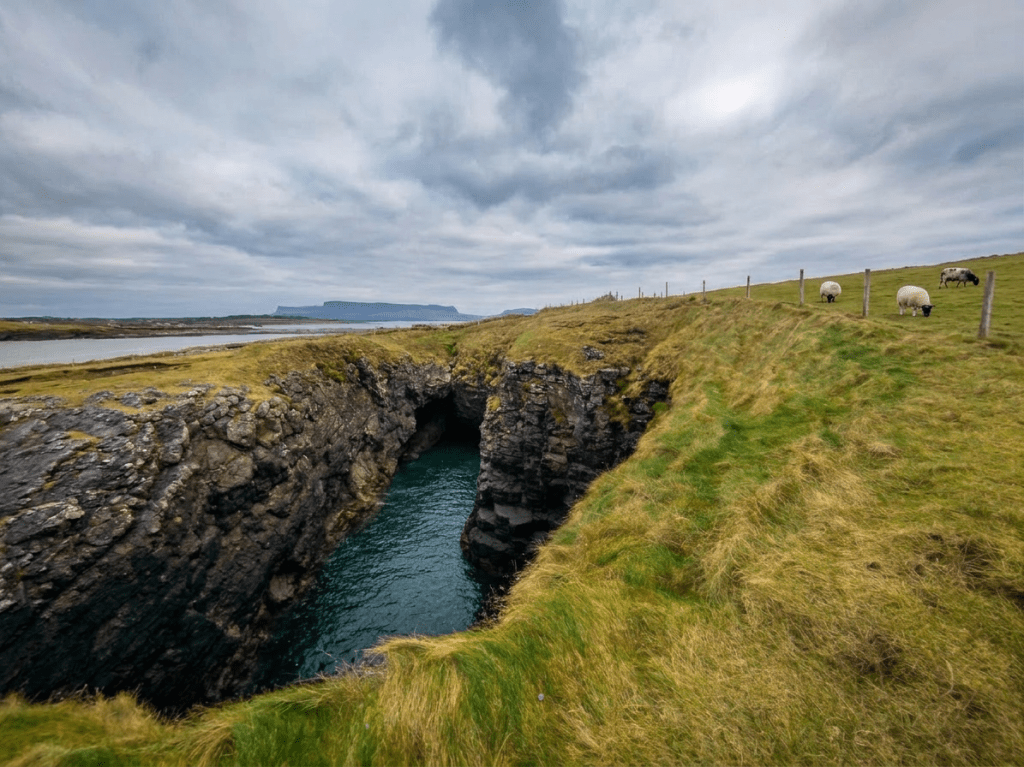
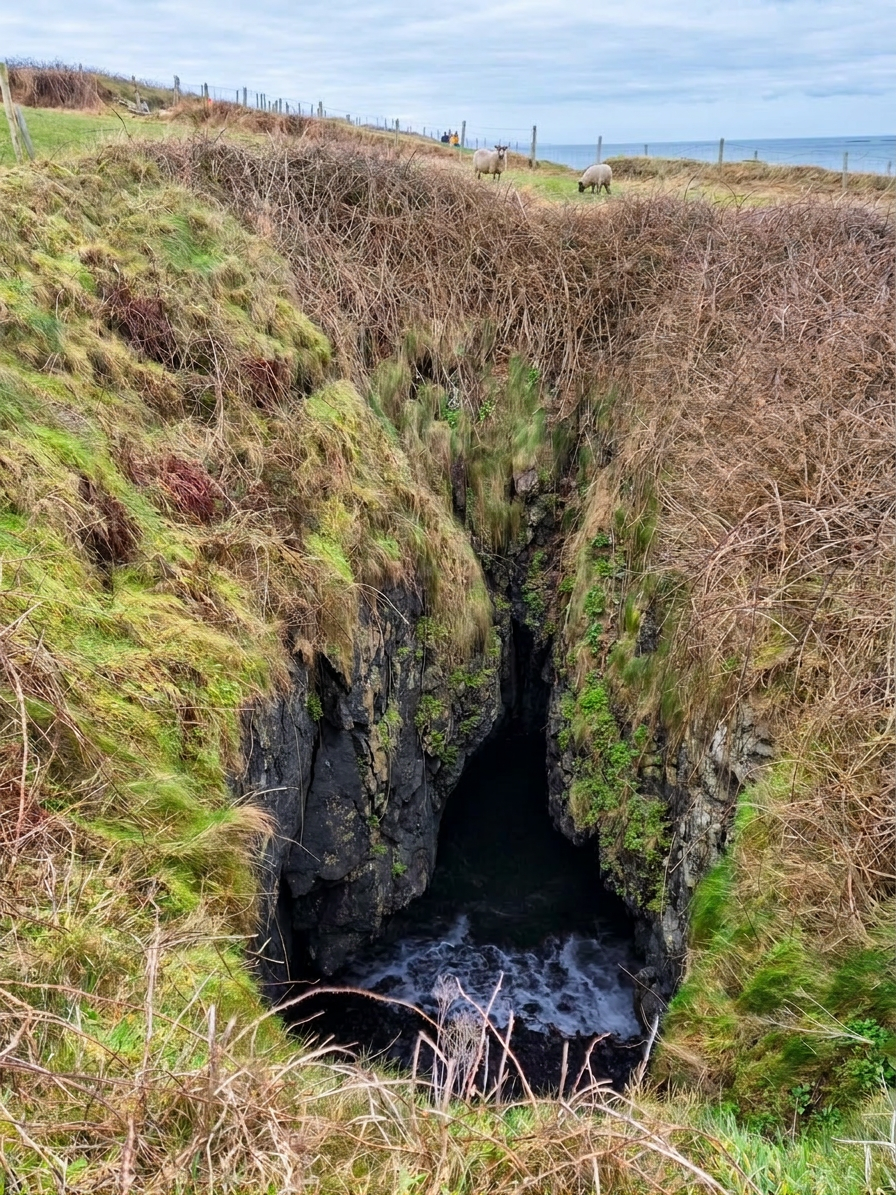
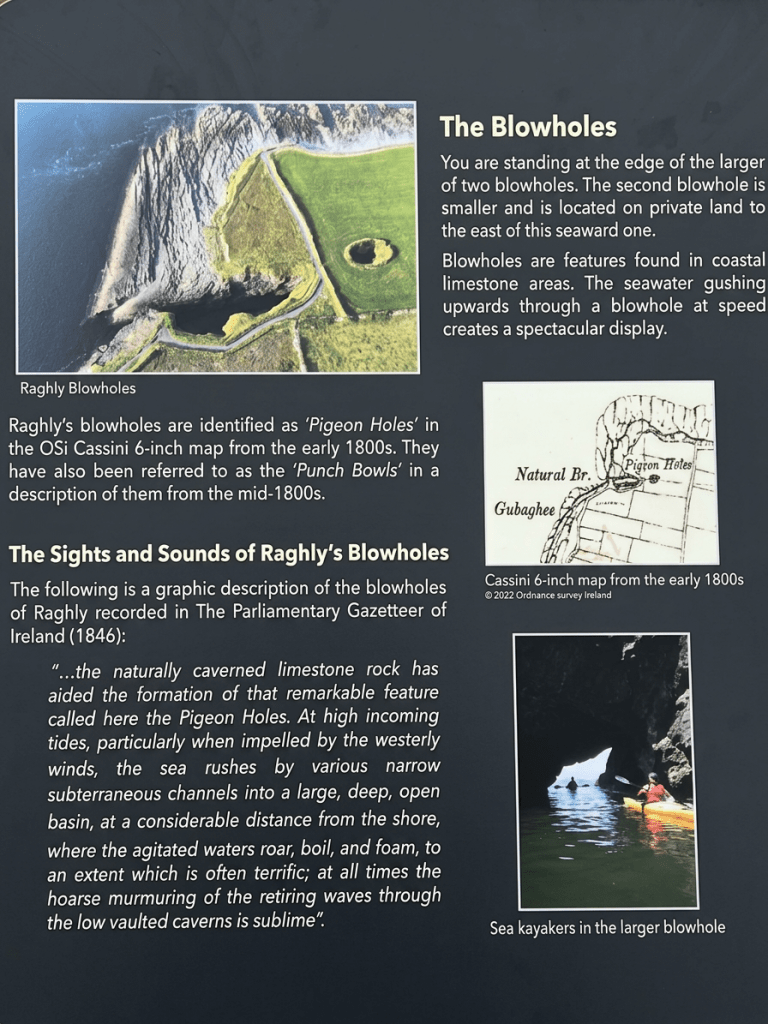
Not far from our pretty, space‑aristocratic residence lies the Raghley Blowhole – an unassuming hole in the ground that, upon closer inspection, revealed itself to be a kind of coastal horn. We inspected it twice: first to catch the blowhole’s special bass, and second to check on the number of sheep stoically standing around the grass‑rimmed shaft.
A blowhole forms when a cavity beneath a rock plate connects to the sea. When waves crash into this cavity, air is compressed and forced upward through the opening. The result is a sound that resembles a natural horn: rumbling, sometimes whistling, and occasionally even alarming for the locals. Blowholes tend to voice themselves when the sea grows restless and storms or heavy weather are on the way.
As a string instrumentalist, I didn’t hear a horn in that sound at all, but rather a drone – a kind of fundamental tone, like the one you hear on the Indian sitar. This underlying vibration, simply present without moving anywhere, has something deeply archaic about it. It carries the melody, holding it like a foundation made of air and stone. Perhaps it is precisely this unwavering bass tone that makes Irish music so earthy – and so free.
Cullenamore Beach – Where the Shore Sings Dark Songs
A few days later, our search for good seafood led us to the friendly little surfer town of Strandhill. As we strolled along the promenade, we encountered yet another strange sound phenomenon. Not quite a roar, not really a rumble – more as if a Carinthian men’s choir were warming up their voices with a deep, repeating crescendo–decrescendo.
Physically, the effect can be explained as follows: “singing sand” occurs when millions of nearly identical sand grains begin to move simultaneously. Three factors are crucial:
1.) Grain size: The sand grains must be very uniform and rounded.
2.) Dryness: Only dry sand can vibrate freely.
3.) Synchrony: The grains must move simultaneously in large numbers.
If these conditions are met, a collective resonance effect occurs. Depending on the type of movement, two phenomena can be distinguished:
a.) Singing Sands – bright, squeaking, almost like a choir of tiny voices
b.) Booming Sands – deep, rumbling, like a natural bass
In the north of Ireland, White Park Bay is famous for its “soprano tones,” the so‑called singing sands. Our beach near Sligo, however, was unmistakably a case of booming sands: a dark, vibrating bass that was anything but easy to locate or identify.

A Pint of Guinness – The Black Metronome
Among the more difficult things to convey—or even to teach—in music is a sense of timing. One player charges ahead as if the horses had bolted, while another trails behind the notes like a tired old mule. For adult students, therefore, I recommend an unusual but effective tip: drink Guinness regularly.
Because Guinness forces you to be patient. Anyone who orders one submits to a small disciplinary ritual. The swirling foam has to settle, has to come to rest. Only then comes the second, precisely placed pour that smooths the surface like a clean final stroke. A pint of Guinness is like a black metronome standing on the counters and tables of Ireland. It sets the tempo— not you.
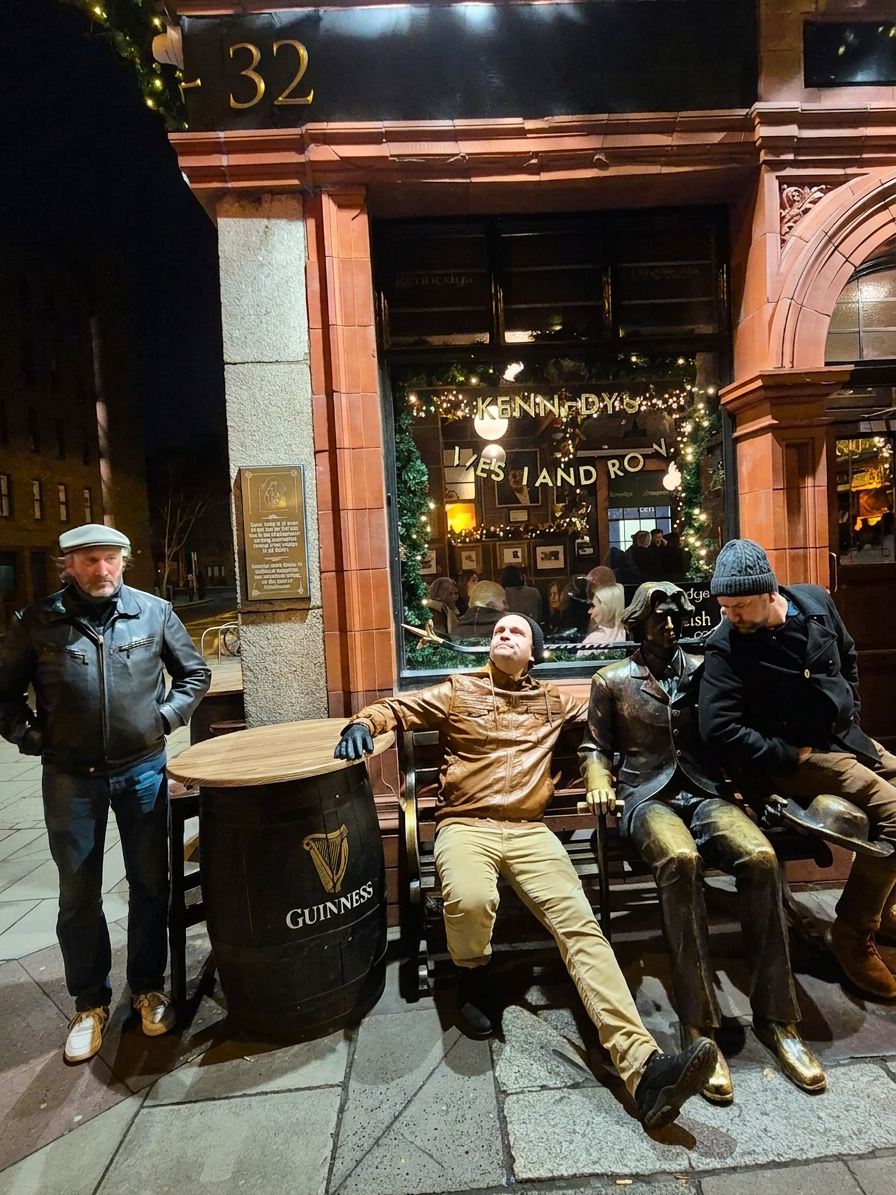
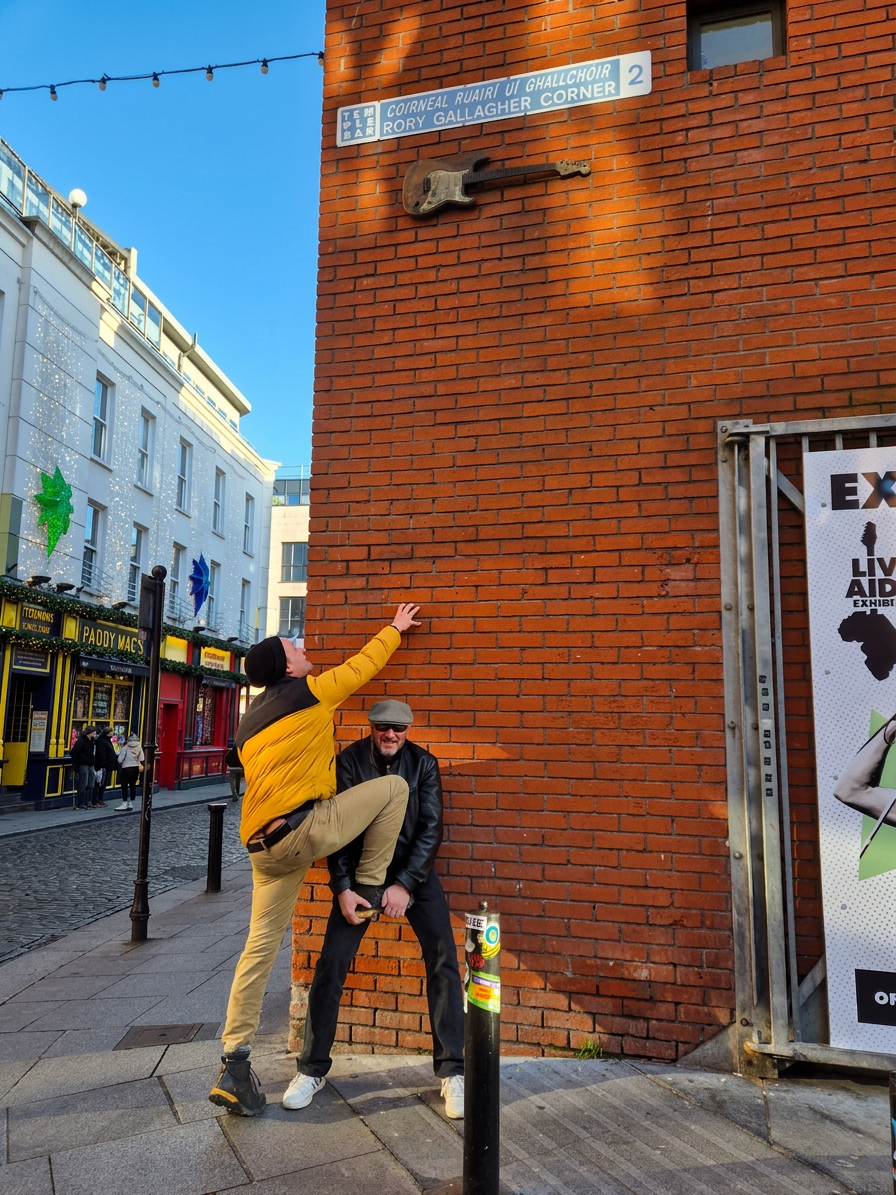
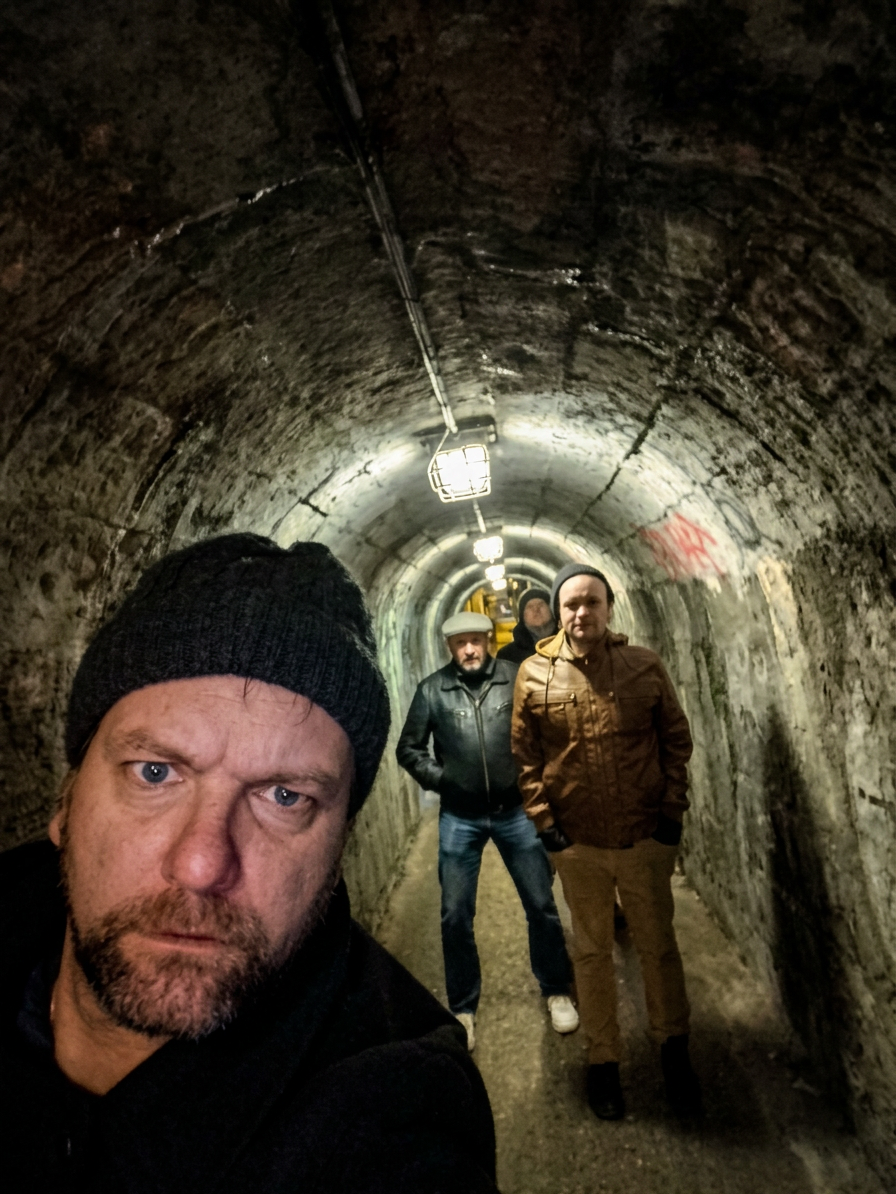
On our trip, we gladly submitted to this discipline—especially toward the end, in Dublin, the calmly pulsating capital of Ireland. Perhaps because the people there seem to have trained their sense of ease in the countless pubs. Whoever drinks a Guinness learns to stay in time.

Ireland in Aftersound – The Tenor Guitar
Back in Berlin, the journey should really have ended. But Ireland lingers in the ear. Shortly after my return, a newly acquired, Celtophile student — greetings and thanks at this point, Okko! — offered me his tenor guitar to experiment with. An extremely rare instrument, originally intended as a transitional tool to coax banjo players toward buying a guitar. This “hybrid” string instrument is tuned in fifths, typically CGDA or — in the so‑called “Irish tuning” — GDAE.
The short piece that follows shall be called “Cloghboley,” in reminiscence of this beautiful townland and its remarkable places. It plays several tricks at once:
a.) With its legato techniques and trills, it serves as a technical exercise for motivated students.
b.) Through its tuning and the constant drone tones, it evokes the sound of blowholes and singing sands, all embedded in a wide, open landscape of fifths.
c.) It was meant to reveal, alongside its melancholy, a touch of the excessive as well — essentially an emergency and signal melody for when the lighthouse is on fire or a ship shatters against the rocks. And once again the call goes out: Austrian Coastguards, please report!
Cloghboley. Video und Tabs
Post‑Credit Scene: Visiting the Shackletons
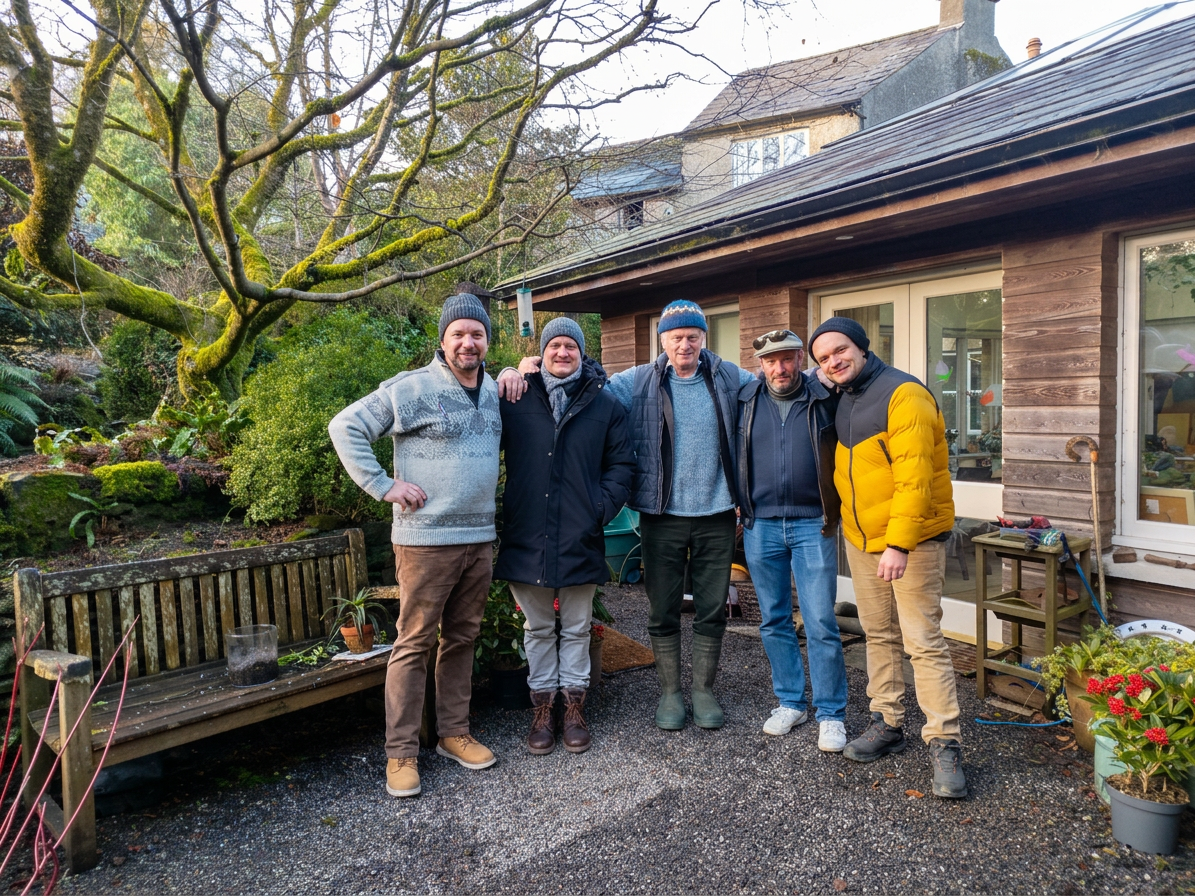
One more wondrous episode deserves to be mentioned. On our way back, thanks to our Schmut‑connection, we had the chance to meet Jonathan Shackleton, the last descendant of the famous polar explorer Ernest Shackleton, and his wife. A particularly lovely interlude of our trip: an afternoon spent in sympathetic, hospitable company, wrapped in a fairy‑tale setting — perfectly representative of the country and its people.
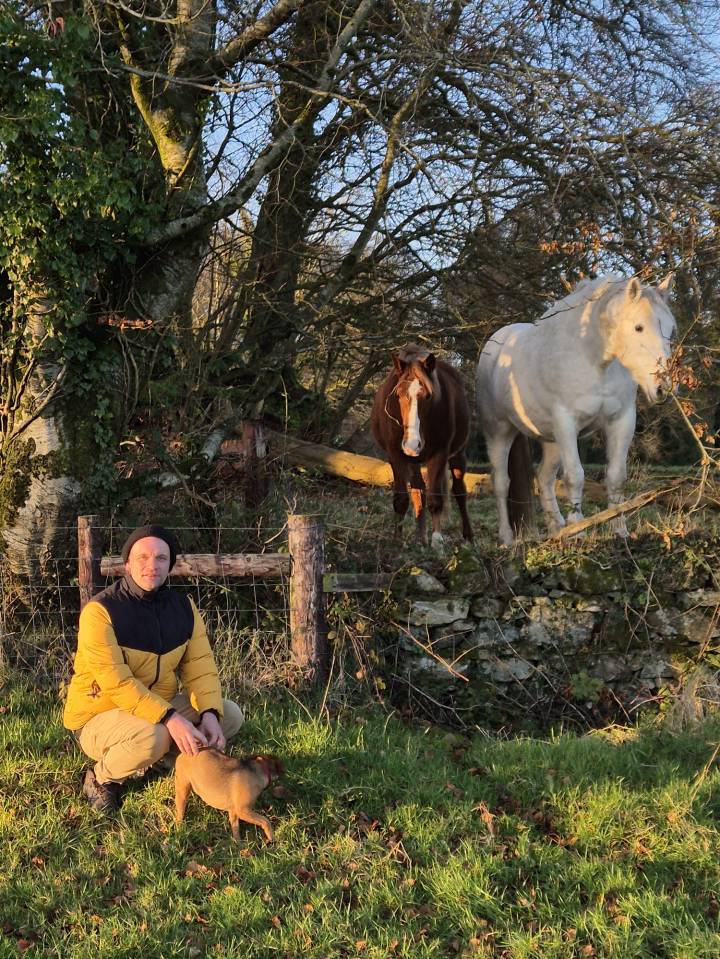
Only the horn on the white horse was missing.
Making a living through music is becoming increasingly difficult. Digital music generates little to no revenue. Fair concert fees are rare, and instrumental teaching is gradually being taken over by AI apps.A donation helps. And it guarantees more authentic content – created by real hands, real hearts, and real strings.
Donate once
Donate monthly
Donate annually
Choose an amount
Or enter a different amount
Thank you for your donation!
Vielen Dank für deine Spende!
Vielen Dank für deine Spende!

